
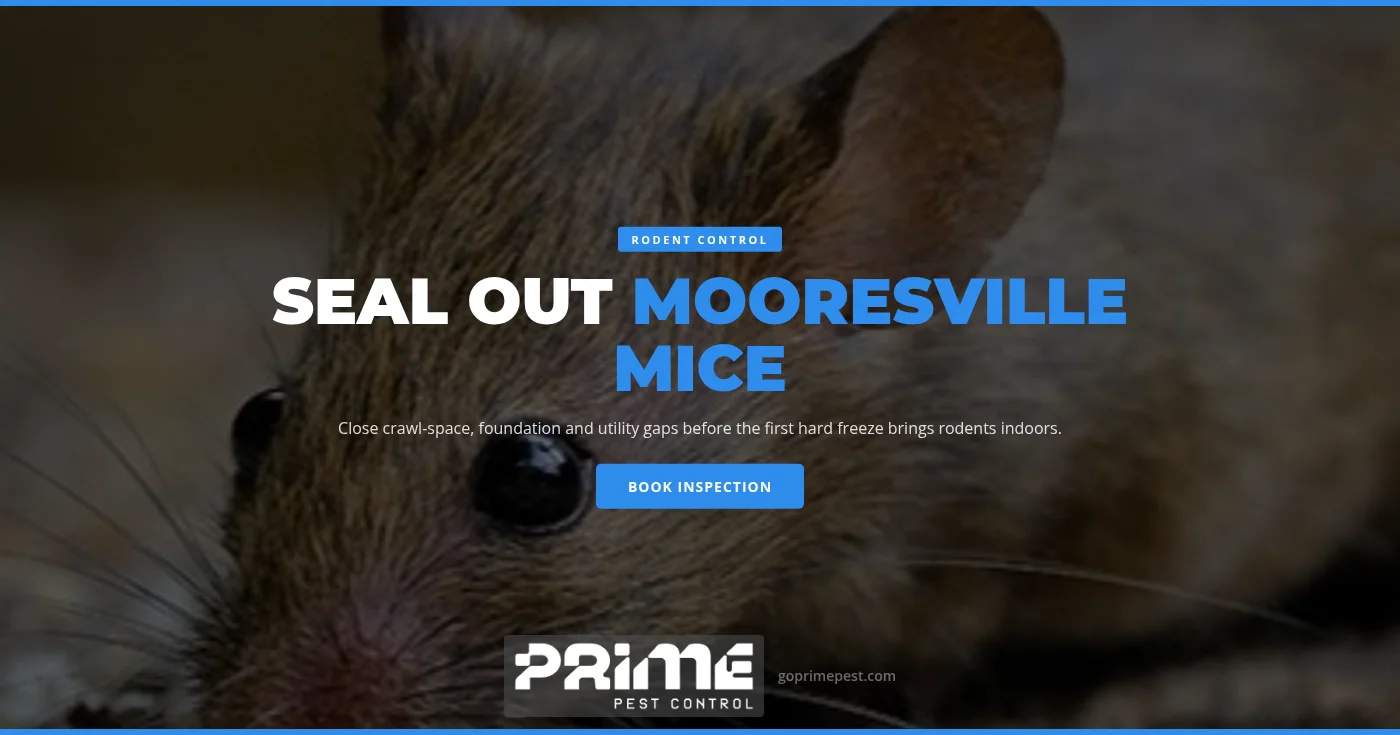
When the first cold snap hits, mice notice before you do. In many of the older homes in Mooresville, scratching in the walls or droppings in the pantry show up right around the time the furnace kicks on. That’s why November is the most important month for rodent control in Mooresville, AL, and why sealing crawl spaces, foundation gaps and utility openings now pays off all winter.
Here at Prime Pest Control, we’ve spent every fall since 2021 helping homeowners across the Huntsville area get ahead of the seasonal rodent rush. Older houses, especially those built on piers or vented crawl spaces, give mice and rats more ways in than newer slab construction. A few overlooked gaps in October can become a full-blown problem by January.
In this post, we’ll explain why rodents move indoors when nights turn cold, how older homes let them in, the early warning signs to watch for, a pre-freeze sealing checklist, the outdoor habits that attract rodents and what a professional visit looks like. We’ll finish with answers to the questions we hear most.
Why Mice and Rats Head Indoors in Mooresville When November Nights Turn Cold
Mice and rats don’t hibernate. When temperatures drop, they go looking for warmth, food and shelter, and your crawl space, wall voids and attic offer all three. In the Huntsville and Decatur area, the first freeze typically arrives sometime in November based on National Weather Service climate records, with the first hard freeze often following a few weeks later. Rodents start probing for entry points before either one.
The rural setting around town adds pressure. As fields across Limestone County are harvested, field mice lose the cover and food they relied on all summer, and many head toward the nearest buildings. Falling leaves, brush piles and freshly stacked firewood give them places to hide along the way.
Timing matters because mice breed quickly. The Alabama Cooperative Extension System notes that house mice can produce several litters a year, and many extension sources put the figure somewhere between five and ten. A couple of mice that slip in during November can become dozens by spring. That’s why fall rodent control in North Alabama is as much about timing as treatment: sealing up before the cold settles in is far easier than removing an established population in February.
How Older Homes and Crawl Spaces Give Rodents an Easy Way In
Older homes have character, and they also have gaps. Wood shrinks and swells over decades, mortar crumbles, foundations settle and generations of plumbers, electricians and cable installers leave holes behind. Rodent proofing older homes is mostly about finding those small openings before a mouse does.
Crawl Spaces and Pier Foundations
Many older homes in the area sit on brick piers or vented crawl spaces rather than a concrete slab. Those spaces are dark, quiet and rarely visited, which is exactly what rodents want. Missing or rusted vent screens, gaps where skirting meets the ground and loose access doors are among the most common entry points. Norway rats like to burrow along foundations, while roof rats tend to climb trees and utility lines to reach attics. Both species live in Alabama.
Utility Openings and Settling Gaps
According to the Centers for Disease Control and Prevention, a mouse can squeeze through a gap about a quarter inch wide, roughly the size of a dime, and a rat through an opening about half an inch wide. In older houses, look closely at:
- Pipe and wire penetrations through the foundation and floor
- Gaps where siding or trim meets the foundation
- Dryer, stove and bathroom vent openings
- Cracks in the mortar between foundation bricks
Early Warning Signs of Mice in Your Crawl Space, Walls and Pantry
Rodents are mostly active at night, so you’ll often notice what they leave behind long before you see one. If you suspect mice in crawl space areas or walls this November, watch for:
- Droppings: Mouse droppings are small and pointed, about the size of a grain of rice. Rat droppings are larger, closer to a raisin.
- Gnaw marks: Fresh chewing on wood, cardboard, food packaging or insulation.
- Rub marks: Dark, greasy smudges along baseboards, beams and pipes where rodents travel the same path.
- Sounds at night: Scratching or scurrying in ceilings, walls or under the floor once the house goes quiet.
- Nesting material: Shredded paper, fabric or torn insulation tucked into corners or cabinets.
- Pet behavior: Dogs and cats staring at or pawing at one spot on a wall.
Don’t brush these off. Rodents chew electrical wiring, which can create a fire hazard, and their droppings and urine can carry diseases, including hantavirus. If you spot droppings in the pantry, check the crawl space and attic too. Where there’s one sign, there’s usually more out of sight.
A Pre-Freeze Checklist for Sealing Gaps, Vents and Utility Openings
Sealing foundation gaps to stop rodents before winter is the most effective step you can take. Here’s the checklist we recommend before the first hard freeze:
- Walk the exterior slowly. Use a flashlight to check the foundation, siding line, vents and every spot where a pipe or wire enters. Anything a pencil fits into is worth sealing.
- Use the right materials. The CDC recommends steel wool combined with caulk, hardware cloth, sheet metal or cement. Rodents can chew through plastic, rubber, wood and foam on its own.
- Screen crawl-space and foundation vents. Covering vents with ¼-inch hardware cloth keeps rodents out without cutting off airflow that helps control moisture.
- Close up utility openings. Pack steel wool or copper mesh around pipes and lines, then seal over it with caulk or mortar.
- Check doors and the garage. Install door sweeps and replace worn garage door weatherstripping.
- Secure the crawl-space access door. Make sure it closes tightly with no gaps at the hinges or frame.
- Look up and inside. Inspect soffits and attic vents where branches touch the roof, then check under sinks and behind appliances for openings into wall voids.
If you own a historic property, changes to visible vents, foundations or trim may be subject to local guidelines, so it’s worth checking with your town office before altering anything on the exterior. Careful sealing work is usually easy to keep discreet.
Outdoor Habits That Draw Rodents Close: Woodpiles, Pet Food and Leaf Litter
Sealing the house is half the job. The other half is making your yard less inviting so rodents aren’t camping right outside the door:
- Move the woodpile. Stack firewood off the ground and well away from the house, not against the siding or porch.
- Bring pet food inside. Store pet food, birdseed and feed in sealed metal or heavy plastic bins, and don’t leave bowls out overnight.
- Manage bird feeders. Spilled seed is an easy meal. Clean it up or move feeders away from the foundation.
- Rake leaf litter. Thick leaves against the foundation provide cover and nesting material.
- Trim shrubs and branches. Keep plants off the walls and cut back limbs that hang over the roof.
- Lid your trash and fix leaks. Tight lids and dry ground take away food and water sources.
These same conditions draw other pests. Clutter, moisture and accessible food attract cockroaches as well as mice, so if you’re seeing both, our cockroach control service is worth pairing with rodent work this season.
What a Professional Rodent Control Visit in Mooresville, AL Includes
DIY sealing goes a long way, but it’s easy to miss an opening behind a deck or under an addition, and hard to tell whether the mice you hear are already inside. Here at Prime Pest Control, we approach mouse control in Mooresville, AL with a clear plan.
Inspection and Identification
We start by looking at the whole property: crawl space, foundation, garage and yard. We identify whether you’re dealing with mice or rats, look for activity and point out the entry points we find so you know exactly where the problem is coming from.
Treatment and Monitoring
Depending on what we find, we place traps or bait stations out of reach of children and pets, focusing on the routes rodents actually travel. Our Prime Garage Guard adds sticky traps along the garage corners so we can see what’s moving through. At Prime, we believe the better the data, the better the decisions.
Follow-Up
Rodent work isn’t one-and-done. Recurring visits let us check traps and stations, watch for new activity and adjust as the season changes. Rodent coverage can be added to our recurring general pest control service for peace of mind through the coldest months. That approach is a big reason we’ve earned a 4.9-star rating from more than 1,000 Google reviews and were rated the best pest control company in Huntsville in 2024.
Frequently Asked Questions About Rodent Control in Mooresville, AL
When do mice move indoors in North Alabama?
Activity usually picks up in October and peaks in November as nighttime temperatures drop and fields are harvested. Many homeowners notice the first signs around the first freeze, so sealing in early fall gives you the best head start.
Can I just use expanding foam to seal holes?
Not by itself, because rodents can chew through foam. Pack the gap with steel wool or copper mesh first, then seal over it with caulk or foam to hold the mesh in place.
Should I close my crawl-space vents for winter?
Rather than blocking vents completely, which can trap moisture, cover them with ¼-inch hardware cloth. That keeps rodents out while letting air move. If moisture is a concern, a crawl-space contractor can advise on your specific home.
How do I keep mice out of an old house in Mooresville?
Focus on the crawl space, foundation vents, utility penetrations and door gaps, keep the yard tidy and store food in sealed containers. Older homes keep settling and developing new gaps, so a yearly fall inspection is a smart habit.
Is it okay to clean up mouse droppings myself?
For small amounts, yes, with care. The CDC advises against sweeping or vacuuming droppings dry. Wear gloves, spray the area with a solution of about one part bleach to ten parts water, let it soak around five minutes, then wipe it up and seal it in a bag. For heavy contamination, call a professional.
Get Ahead of the Freeze with Rodent Control in Mooresville, AL
Effective rodent control in Mooresville, AL comes down to timing. November is the best time of year for rodent control in Limestone County, because the work you do before the first hard freeze keeps mice from settling in for winter. Seal the gaps, screen the vents, tidy the yard and watch for early signs.
Prime Pest Control has served homeowners across the Huntsville area since 2021, and we’d love to help you get your home buttoned up before the cold sets in. Contact us today to schedule your rodent inspection.
How Can We Help Keep Mice and Rats Out of Your Home This Winter?
Here at Prime Pest Control, we know how unsettling it is to hear scratching in the walls once the weather turns cold. Our rodent control service is built to find out where rodents are getting in, deal with the ones already inside and keep watch so they don’t settle in for the season.
When we visit, we:
- Inspect the whole property, including crawl spaces, foundations, garages and the yard, and point out the entry points we find.
- Identify the pest, so we know whether we’re dealing with mice or rats and can plan accordingly.
- Place traps or bait stations along active travel routes and out of reach of kids and pets.
- Gather data with Prime Garage Guard, using sticky traps in garage corners, because better data leads to better decisions.
- Follow up on recurring visits to check activity and adjust through the colder months.
Rodent coverage can be added to our recurring general pest control plan, and we also offer a bundle that covers mosquitoes, fleas and ticks, rodents and general pest control for a flat rate of $89 a month. Military discounts are available, too.
We’re proud to hold a 4.9-star rating from more than 1,000 Google reviews, and we were rated the best pest control company in Huntsville in 2024. If you’re ready for some peace of mind before the first hard freeze, schedule your visit with us today.


