
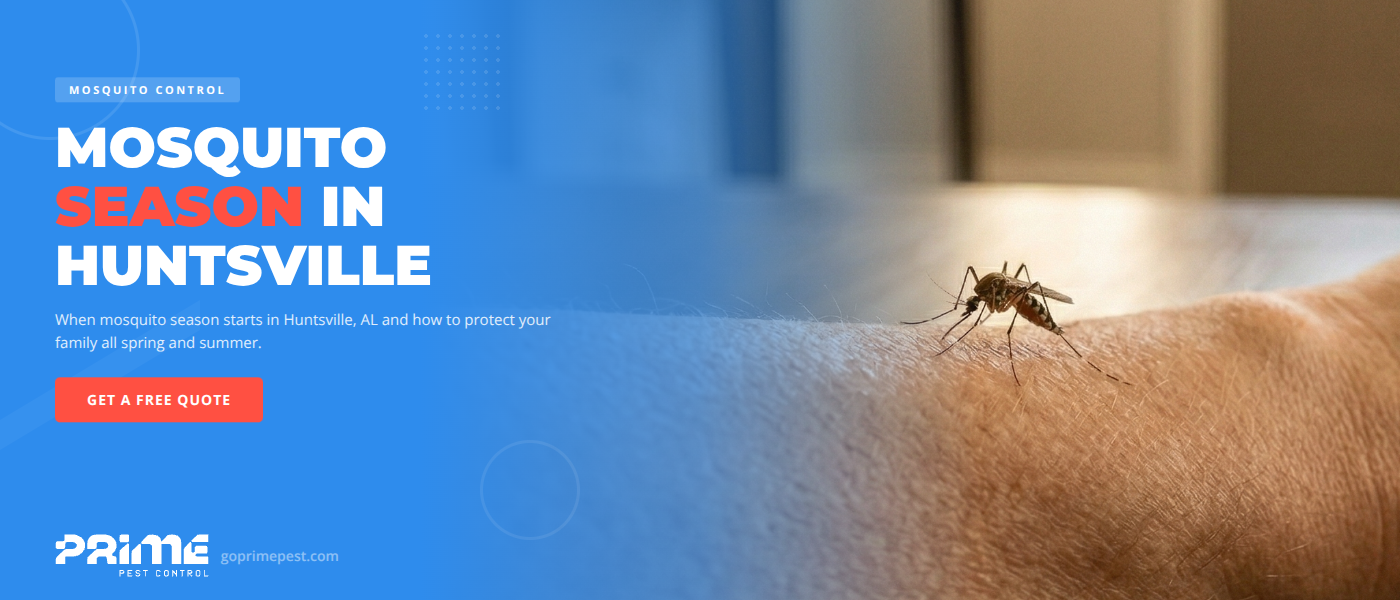
As temperatures climb across the Tennessee Valley each spring, Huntsville, AL residents start noticing a familiar and unwelcome guest returning to their yards, patios, and porches. Mosquito season in North Alabama arrives earlier than many homeowners expect, and the warm, humid climate in the Huntsville metro area creates conditions that allow mosquito populations to explode rapidly once breeding begins. At Prime Pest Control, we help Huntsville families take control of their outdoor spaces before mosquitoes take over, and we want every homeowner to understand when the threat begins, what drives it, and how professional treatment makes a measurable difference.
Alabama consistently ranks among the worst states in the country for mosquito pressure. The combination of our long, hot summers, frequent rainfall, and high humidity throughout Madison County means that mosquitoes have an extended breeding window compared to most of the country. For Huntsville homeowners who enjoy spending time outdoors, understanding the mosquito season timeline is the first step toward reclaiming your yard and protecting your family from the health risks these pests carry.
Mosquito season in Huntsville typically begins in mid-to-late March, right around the time daytime temperatures start consistently reaching the mid-60s. Mosquitoes become active when temperatures rise above 50 degrees Fahrenheit on a regular basis, and they begin breeding aggressively once temperatures exceed 70 degrees. Given that Huntsville's average high temperatures climb into the 70s by early April, the window between initial mosquito activity and full-blown population growth is remarkably short.
The City of Huntsville's Vector Control program operates its mosquito fogging trucks from March through September, which gives you a clear picture of how long the active season lasts here in the Tennessee Valley. However, the peak of mosquito activity in Huntsville falls between late May and early September, when the combination of heat, humidity, and summer thunderstorms creates ideal breeding conditions across the metro area.
Key timeline for Huntsville mosquito season:
We begin our mosquito treatment programs in early spring specifically because controlling populations before they peak is far more effective than reacting after your yard is already overrun. Early-season treatments target the first generation of breeding adults and disrupt the reproduction cycle before it accelerates.
Several environmental and geographic factors make the Huntsville area particularly favorable for mosquito populations. Understanding these factors helps explain why do-it-yourself approaches often fall short and why consistent professional treatment delivers better results.
High annual rainfall. Huntsville receives approximately 55 inches of rain per year, spread across frequent spring and summer thunderstorms. Each rain event fills dozens of potential breeding sites around a typical Huntsville property — clogged gutters, flower pot saucers, birdbaths, corrugated drain pipes, children's toys, and low spots in landscaping. A female mosquito needs less than a tablespoon of standing water to lay up to 300 eggs at a time, and those eggs can hatch in as little as 48 hours in warm weather.
Sustained humidity. The Tennessee Valley's humidity levels regularly exceed 70 percent during the summer months. Mosquitoes thrive in humid environments because high moisture content in the air prevents their bodies from drying out and extends their lifespan. A mosquito that might survive two weeks in a dry climate can live four to six weeks in Huntsville's humidity, giving each individual more time to breed and more opportunities to bite.
Mild winters. North Alabama's winters are mild enough that many mosquito species survive the cold months in a dormant state. Rather than being completely eliminated by freezing temperatures, overwintering adult mosquitoes emerge as soon as spring arrives, giving them a head start on reproduction. This means Huntsville never truly starts a mosquito season from zero — there is always a residual population ready to rebound.
Rapid residential development. As one of the fastest-growing cities in Alabama, Huntsville's ongoing construction creates new mosquito habitat through disturbed soil, construction debris that holds water, and freshly graded lots with poor drainage. New subdivisions often experience heavy mosquito pressure during their first few years before drainage patterns stabilize.
Not all mosquitoes behave the same way, and knowing which species are prevalent in Huntsville helps us design more effective treatment strategies for our clients. The three most common species we encounter in the Huntsville metro area are:
Asian Tiger Mosquito (Aedes albopictus). This has become the dominant mosquito species in residential areas throughout Huntsville and Madison County. Unlike many mosquito species that feed primarily at dawn and dusk, the Asian Tiger Mosquito is an aggressive daytime biter. It feeds throughout the daylight hours, which means you cannot avoid bites simply by staying indoors during the early morning and evening. Asian Tiger Mosquitoes breed in small containers of standing water and rarely fly more than a few hundred feet from their breeding site, which means the mosquitoes biting you in your yard almost certainly bred on your property or your immediate neighbor's property.
Southern House Mosquito (Culex quinquefasciatus). This is the classic dusk-and-nighttime-feeding mosquito that Huntsville residents encounter on warm summer evenings. The Southern House Mosquito is the primary vector for West Nile Virus in Alabama and breeds prolifically in stagnant water sources like storm drains, ditches, and neglected swimming pools.
Mosquitoes are more than a nuisance — they are the deadliest animal on the planet due to the diseases they transmit worldwide. While the risk of serious mosquito-borne illness in Huntsville is lower than in tropical regions, several diseases are actively transmitted by mosquitoes in Alabama and deserve attention from every homeowner.
West Nile Virus. Alabama reports confirmed cases of West Nile Virus each year, and the Culex mosquitoes that carry it are abundant throughout the Huntsville area. Most people infected with West Nile experience no symptoms or mild flu-like illness, but a small percentage develop serious neurological complications. There is no vaccine and no specific treatment for West Nile Virus, making prevention through mosquito control the most effective strategy.
Eastern Equine Encephalitis (EEE) and La Crosse Encephalitis. Although rare, EEE is one of the most serious mosquito-borne diseases in the southeastern United States, with a fatality rate of approximately 30 percent in symptomatic cases. La Crosse Encephalitis primarily affects children and has been documented in Alabama and neighboring Tennessee Valley states. Both diseases underscore why proactive mosquito control matters.
Beyond disease transmission, mosquito bites cause itching, swelling, and discomfort that significantly reduce your family's ability to enjoy outdoor living spaces.
At Prime Pest Control, our mosquito control program combines targeted adult mosquito reduction with breeding site management to deliver comprehensive protection throughout the active season. Our approach for Huntsville properties includes:
Barrier spray treatments. We apply a residual insecticide to the areas where mosquitoes rest during the day — the undersides of leaves, shrub canopies, fence lines, eaves, and shaded areas around your home's perimeter. This barrier kills mosquitoes on contact and continues working for several weeks between service visits. We use products that are effective against mosquitoes while minimizing impact on beneficial insects like pollinators when applied according to label directions.
Breeding site identification and treatment. During every service visit, our technicians inspect your property for standing water and other mosquito breeding sites. We treat water sources that cannot be eliminated — such as storm drains, catch basins, and ornamental ponds — with larvicides that prevent mosquito larvae from developing into adults. We also provide recommendations for eliminating breeding sites you can address between visits.
Recurring seasonal service. Mosquito control is not a one-time event. Because new mosquitoes are constantly emerging from breeding sites in surrounding areas, we provide recurring treatments throughout the active season. Our service intervals are designed around the mosquito lifecycle and local conditions in Huntsville to maintain consistent protection from spring through fall.
Professional treatment delivers the strongest results, but there are steps every Huntsville homeowner can take between service visits to reduce mosquito breeding on their property:
Combining these homeowner practices with our professional barrier treatments creates a layered defense that significantly reduces mosquito populations on your property and keeps your family more comfortable outdoors throughout the Huntsville summer.
July and August are consistently the worst months for mosquito activity in the Huntsville area. The combination of sustained temperatures above 90 degrees, high humidity, and frequent afternoon thunderstorms creates peak breeding and feeding conditions. However, mosquitoes are active from March through October in most years, which is why we recommend season-long treatment rather than waiting until populations peak.
Mosquitoes in the Huntsville area can transmit several diseases including West Nile Virus, Eastern Equine Encephalitis, and La Crosse Encephalitis. While serious illness from mosquito bites is uncommon in North Alabama, the risk is real and the consequences of these diseases can be severe. Reducing mosquito populations around your home is the most effective way to minimize your family's exposure.
We recommend treatments every three to four weeks throughout the active mosquito season, which runs from approximately March through October in Huntsville. This interval aligns with the residual effectiveness of our barrier spray products and the mosquito breeding cycle. Properties near wooded areas, creeks, or retention ponds may benefit from more frequent service.
We apply our treatments to mosquito resting areas — the undersides of leaves, shaded fence lines, and structural eaves — rather than to flowering plants where pollinators are active. Our technicians are trained to avoid blooming flowers and to time applications when pollinator activity is lowest. When applied according to label directions and best practices, our mosquito treatments target mosquitoes while reducing exposure to beneficial insects.
Mosquito season is already underway in Huntsville, and early treatment is the key to keeping populations manageable throughout the spring and summer. At Prime Pest Control, we deliver effective, recurring mosquito treatments that let Huntsville families enjoy their yards without constantly swatting and scratching. We design every treatment plan around the specific conditions on your property.
Contact Prime Pest Control today to schedule your first mosquito treatment and take back your outdoor living space this season.