
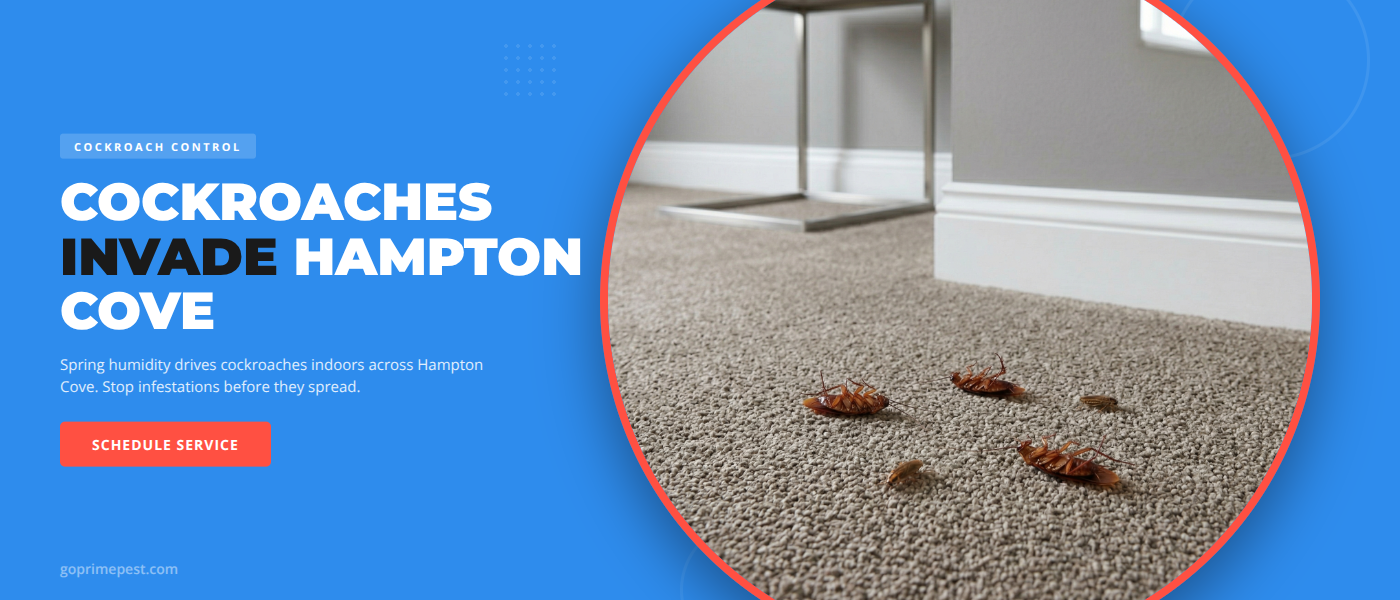
Every spring, homeowners across Hampton Cove, AL notice the same unwelcome shift: a cockroach scurrying across the kitchen floor when the lights flip on, or a flicker of movement near the bathroom drain. As North Alabama warms and our spring rains settle in, our team starts fielding calls about indoor sightings that were not happening a few weeks earlier. Effective cockroach control in Hampton Cove, AL begins with understanding why spring is such an active season — and why it is far easier to address roach pressure now than to chase a full infestation through summer.
North Alabama's humid subtropical climate is part of the reason this happens here every year. Cockroaches are tropical insects by origin, and the same warm, moist air that defines a Tennessee Valley spring is the air they prefer. Mild winters never push cockroach populations into a deep regional die-off, and our wet, warm springs create exactly the moisture-rich conditions they search out. For Madison County homeowners, that means seasonal awareness pays off: a small spring sighting handled now is much simpler than a kitchen-wide problem in July.
Below, we walk through what drives spring cockroach activity, the species you are most likely to encounter, where they hide, the health risks they bring, why DIY sprays disappoint, and when to bring in a professional.
Cockroaches are cold-intolerant. They slow down in cool months, sheltering in crawl spaces, sewer lines, mulch beds, and warm building voids until conditions improve. Once overnight lows climb into the 50s and daytime temperatures push past the mid-60s, overwintering populations reactivate — by April in Madison County, that activity is fully underway.
Three local conditions amplify the spring surge. Heavy spring rainfall — March through May routinely deliver thunderstorms — saturates the ground and drives sewer-dwelling roach species toward higher, drier shelter through foundations, weep holes, garage thresholds, and crawl space vents. North Alabama's humidity rarely drops below the levels cockroaches prefer for breeding, and roach eggs and nymphs need that moisture to develop. And our mild winters mean overwintering populations are healthy when they reactivate.
The pattern in Hampton Cove homes is usually incremental — one roach in the laundry room, then a few more behind the dishwasher, then signs in the pantry. By the time activity is obvious, an established harborage is already in place.
Identifying which species you are dealing with shapes the entire response. North Alabama has four cockroach species that show up regularly in residential calls.
A clear photograph of any roach you find lets our team focus the inspection on the right zones from the first visit.
Cockroaches choose harborage based on warmth, moisture, and proximity to food. Map any home around those three factors and the high-pressure zones become predictable.
Kitchen. The highest-activity zone in most homes. Look behind and under the refrigerator and dishwasher, inside microwave motor housings, in the gap behind the stove, under the sink, in cabinet seams next to plumbing, and inside pantry shelving. German roaches favor the warm voids around appliance motors.
Bathroom. Drain lines, the gap behind the toilet, under and inside vanity cabinets, and behind loose tile or trim. Exhaust fans that vent into attic space are a transit route for smokybrown cockroaches moving down from above.
Basement, crawl space, and garage. American and oriental cockroaches concentrate in these zones — around water heaters, sump pumps, floor drains, and anywhere condensation collects. Stored cardboard boxes are classic harborage; they hold moisture and offer egg-laying surfaces.
Outdoor entry routes. Mulch beds against the foundation, woodpiles within ten feet of the house, clogged gutters, gaps around utility penetrations, weep holes in brick veneer, and the threshold seal under garage doors. Most American and smokybrown roaches we treat indoors entered through one of these routes.
A flashlight inspection of these zones at night — when cockroaches are most active — will quickly tell you whether activity is incidental or established.
Cockroaches are not just unpleasant — they are a documented driver of indoor air quality problems and foodborne illness risk, which is why we treat cockroach activity more seriously than many other household pests.
Asthma and allergens. Cockroach allergen is one of the most significant indoor triggers of childhood asthma in the United States. The U.S. Environmental Protection Agency identifies cockroach allergens as a leading cause of severe asthma symptoms, especially in children. The allergen comes from cockroach droppings, saliva, shed skins, and decaying body fragments. Once it accumulates in carpet, upholstery, and dust, it stays airborne enough to provoke reactions in sensitized household members for months — even after the cockroaches themselves are gone.
Bacteria and food contamination. Cockroaches travel readily between sewers, drains, garbage, and food preparation surfaces. They mechanically transfer bacteria including Salmonella, E. coli, and Staphylococcus on their legs, bodies, and droppings. The Alabama Cooperative Extension System notes that cockroach contamination of stored food, dishes, and counters is a real hygiene concern in homes with active infestations.
Pets. Dogs and cats that catch and eat cockroaches can ingest those same bacteria, and pet food bowls left out overnight are a common feeding station for German cockroaches.
Most homeowners who call us about cockroaches have already tried over-the-counter sprays, foggers, or grocery-store baits. The pattern is consistent: short-term relief, then a return — sometimes worse than before. There are clear reasons the consumer approach falls short.
Contact-only sprays do not reach harborage. A roach killed in the open is one that was already foraging. The breeding population, the egg cases, and the next generation of nymphs are tucked behind the dishwasher, inside the wall void, or in the cabinet seam — none of which a perimeter spray penetrates.
Foggers can scatter German cockroach populations. Aerosol "bug bombs" do not reach harborage and can push surviving roaches into adjacent rooms or wall voids, spreading a problem that was previously contained.
Resistance is real. German cockroach populations have developed measurable resistance to a number of the active ingredients in consumer-grade products. Professional formulations rotate active ingredients and use baits that are still effective on resistant populations.
The moisture and food source go unaddressed. Even a successful knockdown leaves the original conditions in place. Without addressing the leaking drain trap, the standing water under the dishwasher, or the pet food bowl left out overnight, a fresh population moves in within weeks.
Our approach to cockroach control is built around two principles: eliminate the existing population at the source, and remove the conditions that let it establish in the first place. That combination is what produces results that hold through the heat of a North Alabama summer instead of bouncing back two weeks after a one-off treatment.
A typical service visit for a Hampton Cove home includes:
For homes with a confirmed German cockroach infestation, we adjust the protocol to include more frequent follow-up visits in the first 60 to 90 days — the species' fast reproductive cycle requires sustained pressure to break.
Cockroaches slow down in cool months and reactivate as soil and air temperatures rise. In Madison County, overnight lows in the 50s and steady spring rainfall combine to push overwintering American, smokybrown, and oriental cockroaches out of mulch beds, sewers, crawl spaces, and tree holes — straight toward the warm, dry shelter of nearby homes. German cockroaches, which live indoors year-round, also reproduce more aggressively as ambient humidity rises.
German cockroaches are small (about half an inch), light brown with two dark stripes behind the head, and live almost exclusively indoors — particularly in kitchens and bathrooms. They reproduce extremely quickly. American cockroaches are much larger (one and a half to two inches), reddish-brown, and primarily live outdoors in sewers, drains, mulch beds, and crawl spaces. They wander indoors after heavy rain or when populations get crowded outside. The treatment approaches for the two species are very different, which is why species ID is the first step in any of our cockroach inspections.
Yes. Cockroach allergens — from droppings, saliva, shed skins, and body fragments — are one of the most significant indoor triggers of childhood asthma documented by the EPA. Cockroaches also mechanically carry bacteria including Salmonella and E. coli from drains, garbage, and sewers onto food preparation surfaces and stored food. For households with children, anyone with respiratory conditions, or pets that catch and eat cockroaches, sustained exposure is a meaningful health concern that warrants prompt attention.
Three categories of action make the biggest difference: address moisture (fix leaking drain traps, repair standing water under appliances, run dehumidifiers in crawl spaces and basements), eliminate food access (store dry goods in sealed containers, clean under and behind appliances, and pick up pet food bowls overnight), and seal entry points (gaps around plumbing penetrations, weep holes, garage door thresholds, and any visible foundation cracks). Combine those with a professional treatment plan tuned to North Alabama's pest pressure and the result holds through summer.
Spring cockroach activity is a normal part of life in Hampton Cove, AL, but it does not have to mean a season of indoor sightings or a kitchen problem by July. With early intervention and a plan that addresses harborage, moisture, and exclusion together, your home can stay clear through summer. Contact Prime Pest Control to schedule a cockroach inspection. With a 4.9-star rating from more than 2,574 customers across Huntsville and Madison County, we are committed to protecting the homes in our community — one inspection at a time.